
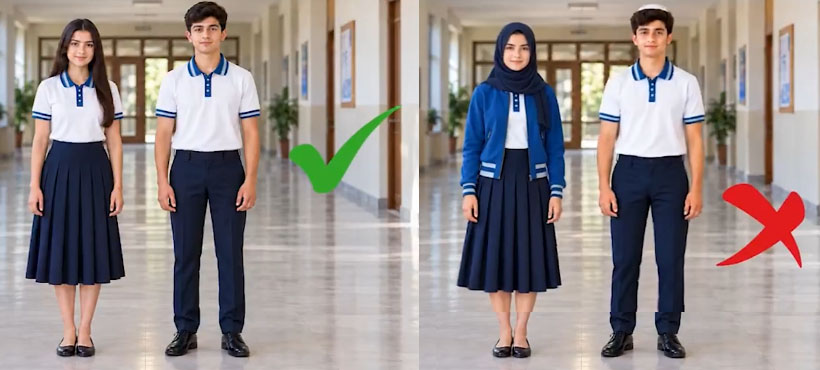
A Muslim-majority nation in the South Caucasus has launched a sweeping crackdown on religious headwear in classrooms to defend its secular constitution and national security.
Schoolgirls wearing headscarves stood outside in schoolyards across Azerbaijan this month, watching through glass windows as classes went on without them.
The South Caucasus nation of nearly 11 million people is roughly 96 per cent Muslim. Yet its constitution guarantees a secular state, setting up a sharp confrontation over religious symbols in public institutions.
Secular decrees bar religious attire
Prime Minister Ali Asadov sparked the conflict on September 21 by signing Decree Number 309 to alter official school uniform regulations. The decree did not name the hijab directly, but prohibited attire that broke uniform rules or breached the principle of secularism in state education.
A second decree issued on October 6 extended these strict uniform requirements to teachers.
In practice, school gates have been shut to headscarved pupils across the country. Teachers have been instructed to take off their headscarves or give up their jobs.
Mass protests erupt at school gates
Disruption quickly spread through multiple towns and cities throughout October. Students at School Number 69 in the Baku suburb of Balakhani refused to attend class to support their excluded peers, while crowds gathered outside School Number 322.
Similar demonstrations occurred in Sumgayit, Jalilabad, and the village of Mollaoba in Masalli. In one city, angered parents threatened to withdraw their sons from school as well.
Authorities responded firmly to the growing disorder. The interior ministry confirmed that 37 individuals were detained during the unrest.
One theologian received 30 days of administrative detention following online posts regarding the uniform policy. Meanwhile, jailed journalist Polad Aslanov, currently serving a 13-year sentence for treason, launched a hunger strike from his cell.
Ideological security targeted by state
Government officials maintain the measures are necessary to safeguard unified secular education. Addressing a congress of his ruling New Azerbaijan Party, President Ilham Aliyev emphasized the critical need for ideological security within schools.
State-aligned commentators pointed directly across the border, alleging Iranian political interference tied to a religious assembly in Qom. A local education group warned that foreign funding was manipulating the issue, while officials reported coordinated online troll operations originating from Iran and Turkey.
Diplomatic rift opens with Turkey
The stance has strained relations with Turkey, Azerbaijan’s primary regional ally. Demonstrators gathered outside the Azerbaijani consulate in Istanbul, recalling Turkey’s 1997 political crisis when headscarved women faced public sector bans.
Oktay Saral, a chief adviser to Turkish President Recep Tayyip Erdogan, described the restrictions on pupils as unacceptable. Former Turkish minister Fatma Şahin urged leaders in Baku to reverse the policy.
President Aliyev’s party rejected the criticism, accusing Turkish-linked media outlets of orchestrating a campaign of defamation. Similar clashes over school headscarves previously erupted in 2011, resulting in arrests outside the education ministry.